Essential for policy makers
Another fantastic episode of the must-listen-to rail podcast Green Signals
Every politician of every party should be forced to listen/read
I find podcasts a great way to catch up on events or analyse current trends... Green Signals is one of the best I've come across.
Episode 1
Welcome to Green Signals, a beginners guide to Blackburn & Burnley, and what on earth were the Government thinking cancelling HS2!
Episode Overview
Welcome to Green Signals, the essential new railway podcast for anyone interested in railways: what they are for, how they work, and why we need them more than ever.
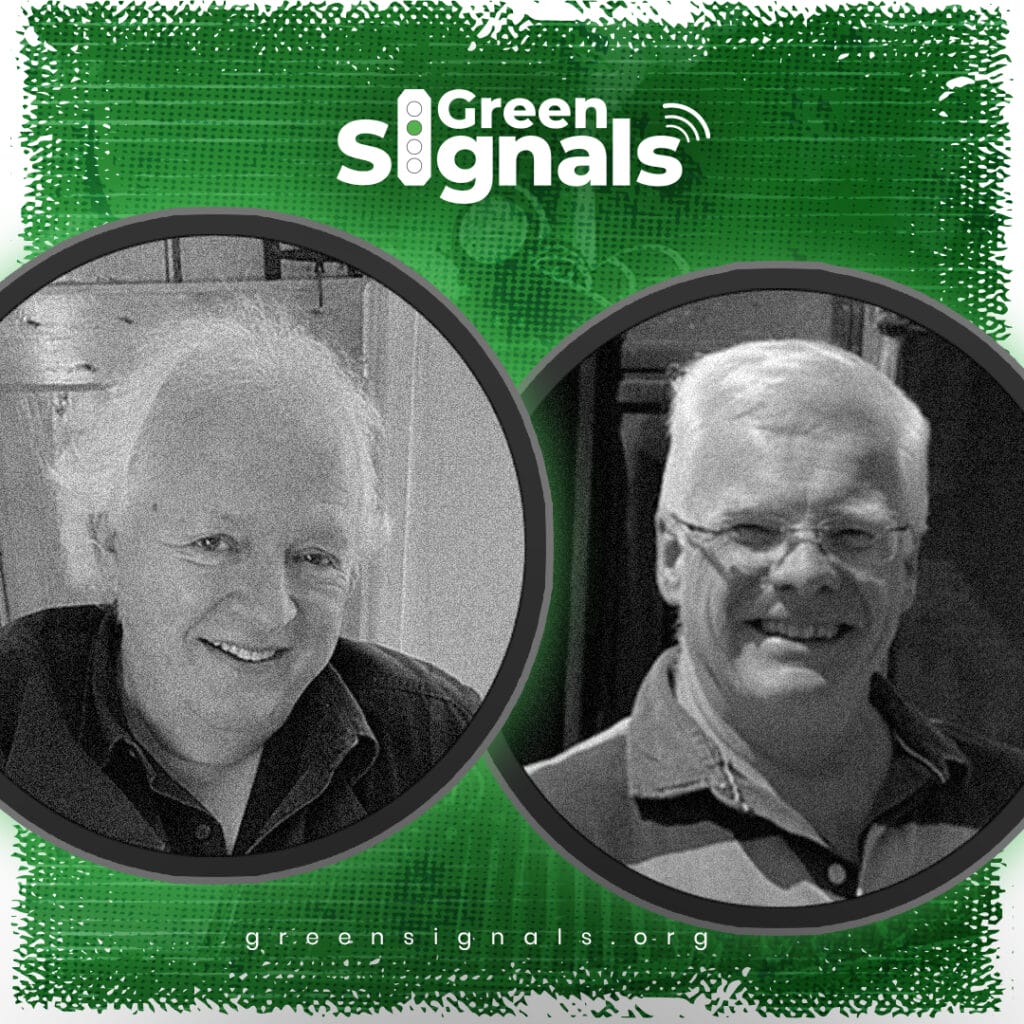
In this Trailer, Nigel and Richard reveal their first meeting on a Virgin Trains press trip to Italy, discuss the relative merits of Blackburn and Burnley and most importantly, consider whether the decision to scrap the northern section of HS2 to Manchester was a really, really bad idea. Or far worse than that.
Hello. I’m Nigel Harris and some of you may know me. I’ve been around in Railway journalism, magazines, books and DVDs since, Oh, the early part of the 12th century or put another way 1981! Now if you’ve been consuming Railway stuff for even a short period of time you may think you’ve seen it all. Well trust me you haven’t.
You certainly haven’t. I’m Richard Bowker and some of you may remember me as co-chairman of the Virgin Rail Group – I’ve still got the scars, that’s for sure. I was run ragged at that time by the West Coast route modernization as it was then and the disruption that that all brought about, something that we do seem to now be destined to repeat. You’d think we’d learned from history. Back to the Future. Back to the Future indeed. I kind of paid for my sins really because in 2001 I was then appointed to succeed Sir Alistair Morton as the Chairman and Chief Executive of the Strategic Rail Authority and arguably sort out part of the mess that I’d helped create. That was a job that I did till 2004. I’ve done quite a bit on the railway since then in terms of National Express and some International stuff but you could say it’s it’s in the blood.
Actually, talking about Virgin Rail Group I’ve got a feeling that that was the first time we met was on that press trip to Fiat’s Factory in Saviliagno. Yes it was Chris Green who rang me up – dear old bloke he is – and said we’re running this press trip and there’s a railway media trip and there’s a wider press trip and we’d like you to go on the wider one if you wouldn’t mind awfully because they don’t believe a word we tell them but they’ll believe you.
For anybody who’s not aware, Chris Green was often referred to as the best chairman British Rail never had. He was a remarkable character, well, is a remarkable character and hopefully somebody we might be able to talk to at some point. When Chris said “would you mind awfully” what it meant was “This is what you’re doing”. But he made it such a pleasure to help him out didn’t he? He did, he absolutely did and and and he was great fun to work with, it was fantastic.
The other thing we’ve got in common apart from nice trips to Italy is we are of course both fellow Lancastrians. Is there any finer thing you could wish to be? No. Well that’s the end of that then! That’s brought that to a close. I’m actually from, I was born in Oldham but grew up and went to school in Blackburn. You of course were from the other side (Here we go – the better side, the Burnley side). Well I’ve heard Burnley called many things – I’m not sure better side is one of them. One of the things that I am passionate about is football and I absolutely love my football, a Blackburn Rovers supporter – finest football club in the land, will hear no comment otherwise – because you’re not a football fan we know but you’ve got an affiliation with Burnley’s ground at Turf Moor. Do you know when I was at school in Blackburn we often used to say Turf Moor was used by NASA for deep space training – do you know why? Total lack of atmosphere! (Boom Tish) In fairness they’ve done fantastically well in recent years and it is slightly irksome that they’re in the Premier League and we’re not.
I have an affinity for the place. I worked there for the entire summer of 1975 before I went to Uni as a painter. What did you paint? Oh what didn’t I paint Richard. In those days there were terraces in that the wonderfully named B hole end [Fantastic!] Am I allowed to say good job it wasn’t an A-hole end (This is Alistair Campbell’s football club we’re being rude about) I know, anyway I painted everything because they had Terraces and there were those Crush barriers that you could lean on oh yeah and there was sheet steel fence right, and I got very adept at paint spraying and doing that but the most soul destroying job was you have no idea how big a football stand is than when it’s completely empty and you’re stood at the first seat on the bottom row with your 2 and a half litre tin of varnish and a 2 and a half inch brush and you’re looking up at two and a half thousand flip up seats that you got to varnish. Well it could have been worse – think what it was like for the poor players coming out onto the pitch!
Anyway, enough about football and and fine Lancastrian clubs we’ve got this podcast we’ve called it Green Signals so what what are we going to be doing? Why are we doing this, well we we’ve had a long sort of discussion (I say long, but not very long really) but we wanted to add our own take and our own comment on what’s going on in the railway industry. So there’s lots of reasons we’re doing this: we’re doing it because Railways are vitally important to the economy they’re vitally important to the society and in the fight in dealing with climate change so we need to be talking about Railways positively. They are a big part of the answer to the question how do we tackle climate change and make a meaningful difference and it’s something that’s not really, I don’t think, discussed or explained enough.
It’s a multibillion pound industry but as far as we can tell, you know, no one’s ever successfully created a platform for comment, and challenge and debate and we thought we’d try and do something about that in a way that explains it to the widest audience possible. That includes politicians – they seem to to be very confused on rail – Conservatives appear to have forgotten what rail is for, Labour seem to be making lots of grand statements but there’s not a lot of “how” yet and you know other parties the Greens well, that’ll be an interesting episode when we get to talk about their policy on rail. Talking of which, fun: the other thing we’re actually going to do is going to have quite a lot of fun on this. It’s going to be serious, it’s going to be hopefully interesting but it’s also going to be some fun isn’t it.
Well it is because it gives us an opportunity to hold them to account, ask them difficult questions – with your background and mine we know what they are and we’re we’re not going to let them get away with it. Your opening comment there that Railways are important, how good it would be if the government thought that which is an interesting question but what’s it going to be, well you and I have been discussing railways since you left the SRA – you might not been very prominent on the the railway scene since but you and I have stayed in touch and we have endless discussions about this and there’s a whole load of stuff we could look at: “Why does Rishi Sunak hate trains so much” – be a good one; Do we need to nationalize the railways (as if they’re not already); What went wrong with privatization and what went right with privatization you know, because 800 million people on the last day of BR and 1.6 billion before the lockdown; How do we get more freight on the railways; Why can’t we build trains that work anymore and that’s not a new problem isn’t it, I remember Sir Alastair Morton used say the damn things just don’t work out the box and they ought to; Great British Railways – well, that went well; ticket offices, an exercise in ignoring three quarters of a million people it would seem; reversing the Beeching closures – now I know that’s a really good one for you [Wait!]; fuel of the future, hydrogen or battery and a Christmas special you know listeners Q&A that involves everybody (oh my goodness) but I’m not wearing a paper hat.
But we cannot even in this taster not mention the recent scandal of HS2 can we? No, well we certainly can’t overlook possibly the biggest decision that’s been taken on the railways in the last, well many decades and one which will impact it for decades to come. I mean that’s how big this decision is. Some of the things we’ve been looking at and some of the things we will explore in podcasts to come are some of the things we’ve actually found out about HS2 and we’ve been discussing them, I mean, for instance – one of the things I’ve been doing quite a lot is reading all the business case literature about HS2. Now for those who are in danger of switching off already a business case really sets out why we’re doing it, you know, what the costs are and what are the benefits – what’s the point.
And you have found out some stuff which is arguably, well it is exclusive and I think some of it’s a scandal that we’re going to be um we’re going to be looking at um yeah it’s it’s stuff that’s just not been in the public debate and it’s really important stuff so for instance when you do a project, you list all the benefits. It turns out that a very significant number of the benefits of HS2 have not been quantified, right, they’ve not been quantified and they include things such as all the released capacity. So we know that HS2 will take all the fast trains off the network to allow us to run lot more trains including freight trains, local trains, regional trains – the social benefits of doing all that is not part of the business case. Sso just to interrupt then (you have to get used to that!) not a penny or a pound of that benefit has been counted? I’ve been saying for years on TV and radio that once you move the 47 expresses off the West Coast you could fill it up with 100 mile/h interurban services for all the stations that aren’t served and there’s extra freight – it never occurred to me, to my shame, to say why not? What’s that worth? I kind of assumed it will have been included in the BCR but it hasn’t.
No and, it’s actually worse than that – so there are a whole group of other wider economic benefits that also have not been quantified; we’ve not quantified the level of foreign direct investment that may come as a result of creating HS2 yet we know (Oh, and we’ve also by the way not counted what’s called clustering or induced development where things change because of HS2) yet we know around Curzon Street, the Birmingham area that that has happened. well look what happened round St Pancras / Kings Cross. So we will be doing an episode where we will dig into these and it must be hundreds of millions of pounds worth of value and benefits which to be clear have not been included or if they have they’ve been kept out of the public debate.
They’ve not been included – the business case documentation says we think they’re there in fact we know they’re there but it’s very difficult to calculate them so we won’t but as you say that has a massive implication. That is outrageous! Well, we’ll be into it! We will be going into that in some detail. Other things that we have found out about HS2 include, well I say found out, interesting comment by Henri Murison, the Chief Executive of Northern Powerhouse the other day – good man – very good man, very passionate, very committed but also very smart, and Henri said you know as a result of the decision to cancel HS2 to Manchester the economy of the North in however many years (20 years) 20 years time will be smaller compared to what it is today and that’s a big statement but actually since we know that what HS2 would have made a profound contribution towards is this so-called leveling up, bringing and generating more economic activity in the North in the Midlands and so on to rebalance the economy that is now not going to happen in anything like the same way. Just let that hang in the air: the North’s economy will be smaller in 20 years according to Henri so we’ll certainly be looking into that. Well that’s where we’re from so we kind of care! Absolutely is!
What else? I mean one of the big issues of HS2 this recent decision is we’ve effectively frozen it in time. What do we mean by that well by building phase one, the bit that the Government has said they’re going to build from London Euston or Old Oak Common depending on what day of the week it is, and then finishing it in Birmingham but also with a bit north of there to join the West Coast Main Line, what that means is there’s no more capacity there’s no more trains that we can run north of that point, right, that sets the capacity, that’s what freezes it and yet guess where all the really big bottleneck and logjams are? Yep, they’re North, well done! So there can be no more passenger trains expresses and there can be no more freight as a result of this. Freight really does get hurt by this decision because the line is really sort of chokka block north of Lichfield, and what HS2 did was it obviously got the fast trains off and enabled you to run more other stuff. Freight is really badly hurt by it but actually so is everything else – there were only ever two way ways to create more space on the railway in the north. You either did a big transformational jump like HS2 or you do what the Government’s alluding to now which is lots and lots of little schemes and upgrades which we know are expensive, massively disruptive and don’t really ever fix the problem.
And how did our Prime Minister describe all this? Well one of the things that we will be doing no doubt is looking into more more detail around the most recent policy statements but he said this for instance – he said for our biggest investment priority taking up a third of the entire transport investment budget, we chose HS2, a scheme for long distance rail journeys between a handful of cities and London. The reason for doing HS2 was to get the high speed trains off the existing network so that we could free up the capacity for everything else we wanted to do and create connectivity between the regions, and he’s right that it will speed up the journeys between cities and London (it also massively sped up the journeys between say Birmingham and Manchester which was a big thing, absolutely critical for levelling up and regional connectivity and that will now not happen) and to sort of suggest that the only reason we did it was to get to London quicker that’s just wrong. And that’s just wilfully misleading? Well it’s absolutely wrong and the problem is it sort of reinforces the misunderstanding that’s out there and hopefully that’s something we can do something about.
So one more big point I suppose before we wind up our trailer here is we understand that principle in other areas don’t we of taking the fast trains off to create capacity because we did it in the 1950s with the motorways. We had terrible log jams in Okehampton and places like that and some bright person said let us build a high-speed road network which can alleviate the the problems on the tightly packed a roads and there will be more capacity all around and this is no different. That’s why HS2 was called HS2, it was meant to foster a thinking of a growing network? That’s right and the other fascinating thing about the motorways and you kind of have to look at where they were at the moment in time as you say – so late 50s, Britain just coming out of austerity, was not long since the second world war and more freedom, more economic growth, people having more money to be able to go and do stuff, and they wanted to get out, they wanted to go in their cars. They didn’t really want to do it the old way, but the road network just couldn’t cope with that and what’s really interesting about it; somebody, somewhere (I’m sure it was a group of people had a vision) and they knew I suspect that quite a lot of them would not be alive to see the last the last Motorway finished. But it was a vision and it was a strategy and it was transformative and that is what HS2 was. Genuine visionaries do that don’t they, Sir Christopher Wren never lived to see St Paul’s Cathedral finished – I think it took 38 years to build. Capability Brown never saw any of his great gardens so I think that is a really very important point. which we’ll go through so yeah.
It is a very interesting document and decision, but the good news is we’ve got Network North. And you know I honestly I’ve been looking at transport policy for a long long time and been involved in developing it and all that kind of stuff – I’ve never seen in all those years a document so lacking in strategic coherence or kind of rigorous logic and analysis than this Network North document. I mean it gets, in my view, it gets an awful lot of the justifications wrong and then it just produces a list of other stuff which is not, it’s disconnected. Well I’ve been reading transport strategic policy documents and Regulatory documents (they were always fun) for as long as you have and it comes across to me as a journalist more like an electioneering document than than a policy document. Well we can get into that we can because the one thing it’s not is a strategic policy document.
Okay let’s leave it there shall we for now, Richard. Great little chat there and I enjoyed it. It gives an idea of the sort of thing that we’re going to be talking about and how we’ll be talking about it.It will be different. Please have a look for us on Twitter you can find us. We want you to be part of the team. I’m not going to use the word follower – we want you to be Green Signallers as well so you can find our Twitter account or X account or whatever they call it now @Greensignallers – that’s us on Twitter and if you’re already a consumer of podcasts and most people are when they’re doing the ironing or watching the car running or walking or whatever, take a look at Spotify or wherever your podcast provider of choice is and sign up so you don’t miss any episodes.
We haven’t quite decided exactly when they going to drop yet but we will get the news out on our own Twitter accounts. Mine’s @railnigel and yours is @srichardbowker and rest assured we’ll be telling when it’s coming soon and we hope you’ll join us and we hope you’ll participate. It’s a big debate about a big subject that we all care about and on a serious note Richard and I love the railway and its people and we’ve spent our working lives in our own ways trying to make it better and this is our next chapter doing just that. It certainly is. Do join us. [Music]